

Form 2290 in Minnesota: File Your HVUT Online in Minutes
Running a heavy truck in Minnesota means the IRS wants its Heavy Highway Vehicle Use Tax, based on your vehicle’s taxable gross weight. With Truck2290, you can e-file Form 2290 in Minnesota, pay your HVUT, and get your IRS-stamped Schedule 1 the same day, without stepping into an IRS office.
Ready to file? File your Form 2290 in Minnesota today and drive away with your stamped Schedule 1.
Form 2290 in Minnesota
If you own or operate a heavy vehicle that travels on public highways with a taxable gross weight of 55,000 pounds or more, the IRS requires you to file Form 2290 and pay the Heavy Highway Vehicle Use Tax (HVUT) every year. This applies whether you are an owner-operator with a single truck or a fleet manager running dozens of vehicles across Minnesota’s highways.
Truck2290 makes filing Form 2290 in Minnesota simple, even if this is your first time hearing about HVUT. Our platform is built to walk beginner truckers through the process step by step, so you know exactly what is being filed and why.
Quick Answer: Form 2290 in Minnesota at a Glance
- What it is: An annual federal tax return (Form 2290) used to report and pay the Heavy Highway Vehicle Use Tax (HVUT)
- Who files it: Owners of heavy vehicles with a taxable gross weight of 55,000 pounds or more, operating on public highways
- Tax period: July 1 to June 30 each year
- Standard deadline: August 31 for vehicles already on the road as of July 1
- What you need: An EIN, a valid VIN for each vehicle, and the taxable gross weight category
- What you get: An IRS-stamped Schedule 1, required for heavy vehicle registration with the Minnesota Driver and Vehicle Services (DVS)
- Where to file: Online through Truck2290, supporting both single-vehicle and bulk filing for fleets
What Is Form 2290? Minnesota Truckers’ Guide to HVUT
Form 2290 is the IRS form used to report and pay the Heavy Highway Vehicle Use Tax. HVUT is a federal tax on heavy vehicles that use public highways, and the amount owed depends on the vehicle’s taxable gross weight. Minnesota, like every other state, requires proof of HVUT payment before it will register or renew registration for a qualifying heavy vehicle. This proof comes in the form of a stamped Schedule 1, which you receive after filing Form 2290 in Minnesota.
In simple terms: if your truck is heavy enough to fall under the IRS threshold and it runs on Minnesota’s highways, you owe HVUT, and you need to file Form 2290 to pay it and get the paperwork the state requires.
Who Needs to File Form 2290 in Minnesota
You need to file Form 2290 if you register a heavy motor vehicle in Minnesota with a taxable gross weight of 55,000 pounds or more. Taxable gross weight includes the weight of the truck itself, the trailer (if any), and the maximum load typically carried. Vehicles expected to travel 5,000 miles or less in a tax year (7,500 miles or less for agricultural vehicles) may qualify for suspended tax status, though a return still needs to be filed.
Owner-operators
Owner-operators registering a single truck in Minnesota.
Trucking companies
Trucking companies and fleet owners managing multiple vehicles
Anyone renewing
Anyone renewing heavy vehicle registration with the Minnesota DVS
Anyone putting a new heavy vehicle on the road
partway through the tax year
Taxable Gross Weight Categories
The IRS calculates HVUT based on taxable gross weight, grouped into weight categories starting at 55,000 pounds and going up to over 75,000 pounds. Vehicles at 55,000 pounds fall into the lowest taxable bracket, and the tax amount increases as weight increases, up to a set maximum for vehicles at 75,000 pounds and above. Knowing your correct weight category before filing helps make sure your Form 2290 in Minnesota is accurate from the start.
This typically covers most semi-trucks, tractor-trailers, and other heavy-duty commercial vehicles used on public roads. If your rig falls under this weight, the IRS considers it a “taxable vehicle,” and you’re required to file, even if you only drive it occasionally.
Why the Stamped Schedule 1 Matters
Once the IRS accepts your Form 2290, you receive a stamped Schedule 1. This document is proof of HVUT payment and is required by the Minnesota DVS to register or renew the registration of your heavy vehicle. Without a valid stamped Schedule 1, you cannot complete heavy vehicle registration or renew your license plates in Minnesota.
When you file Form 2290 in Minnesota through Truck2290, your stamped Schedule 1 is delivered digitally, so you can move forward with registration without delay.
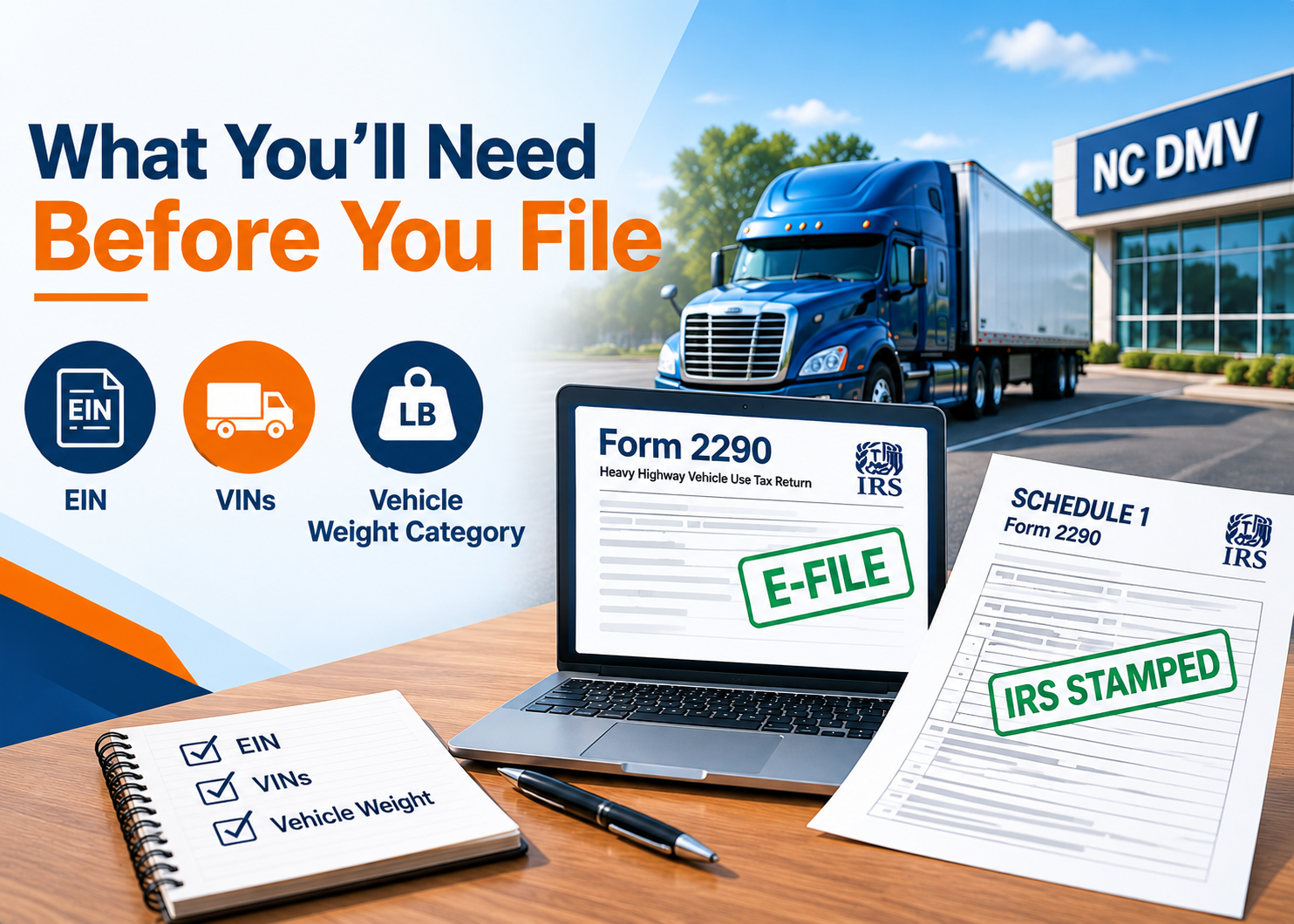
What Documents Do You Need to File Form 2290?
Before you file Form 2290 in Minnesota, make sure you have the following ready:
- EIN (Employer Identification Number): The IRS requires an EIN, not a Social Security Number, to file Form 2290. If you do not already have an EIN, apply for one early, since it typically takes a few weeks for a new EIN to become active in the IRS system.
- VIN (Vehicle Identification Number): Each vehicle you file for must have its correct 17-character VIN. Double-check this number, since an incorrect VIN can delay processing of your return.
- Taxable gross weight category: Know your vehicle’s weight category, since this determines the HVUT amount owed.
What Is Form 2290?
The IRS requires e-filing for anyone reporting 25 or more taxable vehicles on a single Form 2290. Even with fewer vehicles, e-filing is faster and gets you your stamped Schedule 1 much sooner than paper filing. Truck2290 supports both single-vehicle filing and bulk filing, so whether you are filing for one truck or managing a large fleet, the process stays organized and straightforward.
| Situation | Filing Deadline |
|---|---|
| Vehicle already on the road as of July 1 | August 31 |
| New vehicle first used on public highways during the year | Last day of the month following the month of first use |
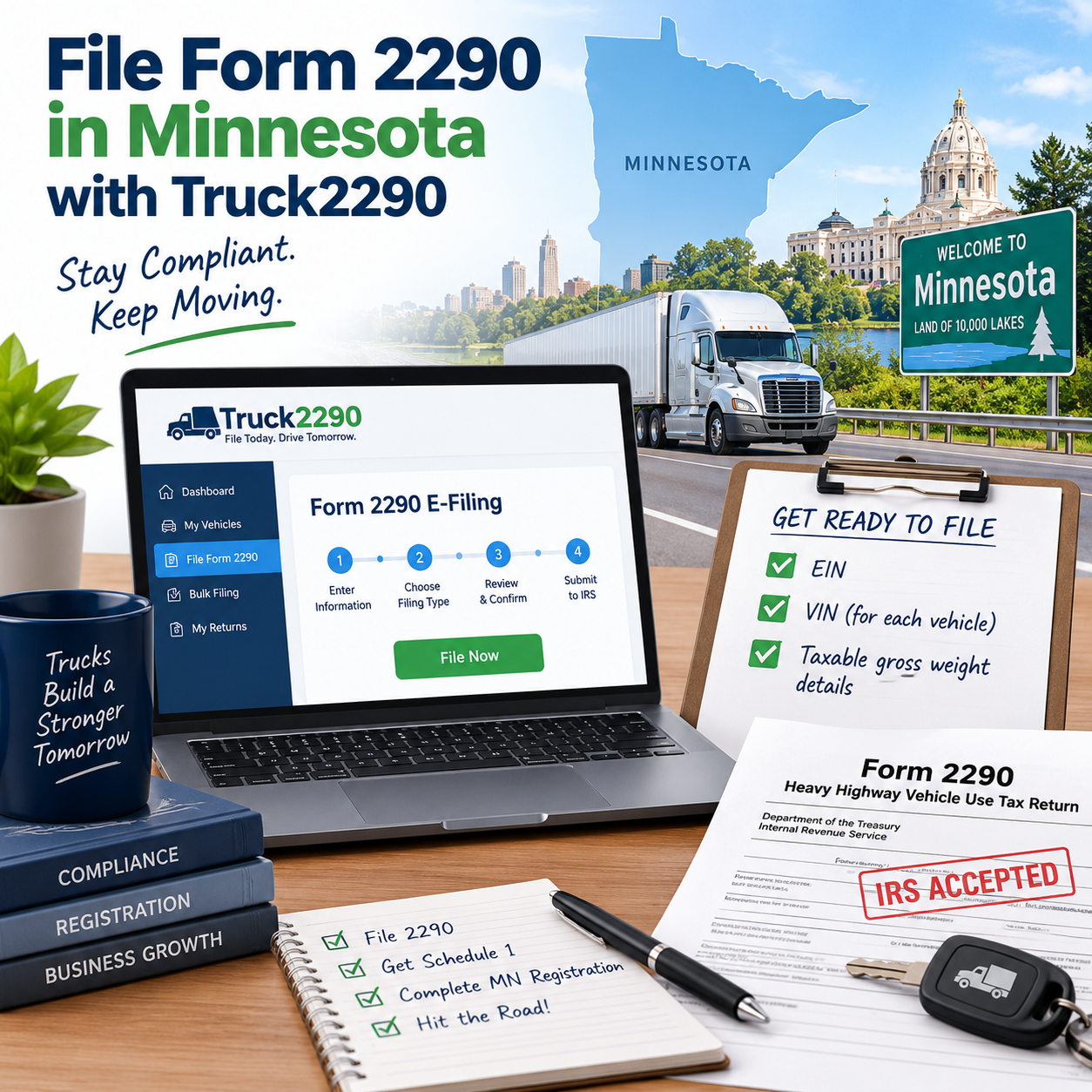
How to File Form 2290 in Minnesota with Truck2290
Getting your paperwork together ahead of time makes the whole process faster. Here’s what to have on hand:
- Gather your EIN, VIN for each vehicle, and taxable gross weight details
- Create an account on Truck2290 and enter your business and vehicle information
- Select single-vehicle filing or bulk filing, depending on your fleet size
- Review your Form 2290 details for accuracy before submitting
- Submit your return for e-filing with the IRS
- Receive your IRS-stamped Schedule 1 digitally once the return is accepted
- Use your stamped Schedule 1 to complete heavy vehicle registration with the Minnesota DVS
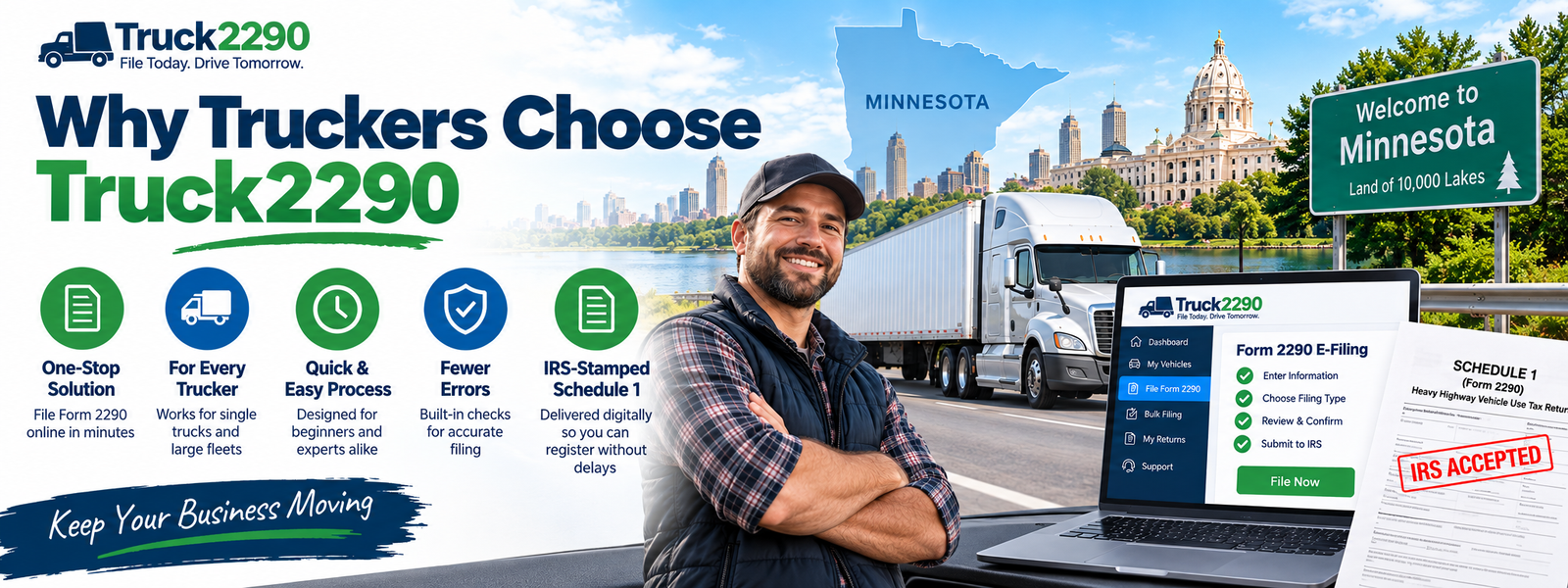
Why Truckers Choose Truck2290
Truck2290 is built as a one-stop solution for filing Form 2290 online. Whether you are a first-time filer with a single truck or a fleet manager handling bulk filing for dozens of vehicles, our platform is designed to make the process clear and quick for beginners and experienced truckers alike. Filing Form 2290 in Minnesota through Truck2290 means less paperwork, fewer errors, and a stamped Schedule 1 delivered digitally so you can complete your heavy vehicle registration without unnecessary delays.
Frequently Asked Questions
What is Form 2290 in Minnesota used for?
Form 2290 is used to report and pay the Heavy Highway Vehicle Use Tax (HVUT) on heavy vehicles with a taxable gross weight of 55,000 pounds or more that operate on public highways in Minnesota.
How long does it take to get a stamped Schedule 1 after e-filing?
When you e-file, the IRS typically processes returns quickly, and Truck2290 delivers your stamped Schedule 1 digitally once the IRS accepts your return.
Is e-filing mandatory for Form 2290 in Minnesota?
E-filing is mandatory for anyone reporting 25 or more taxable vehicles on one return. It is optional for smaller filers but recommended, since it is faster than paper filing.
Can Truck2290 handle bulk filing for my Minnesota fleet?
Yes. Truck2290 supports bulk filing so fleet owners can file Form 2290 for multiple vehicles in a single, organized process instead of filing each one separately.
What happens if I miss the Form 2290 deadline in Minnesota?
Late filing can result in IRS penalties and interest. It can also delay your heavy vehicle registration with the Minnesota DVS, since a current stamped Schedule 1 is required for registration.
Do I need a new stamped Schedule 1 every year?
Yes. Since the HVUT tax period runs from July 1 to June 30, you need to file Form 2290 and obtain a new stamped Schedule 1 each tax year to keep your heavy vehicle registration current.